


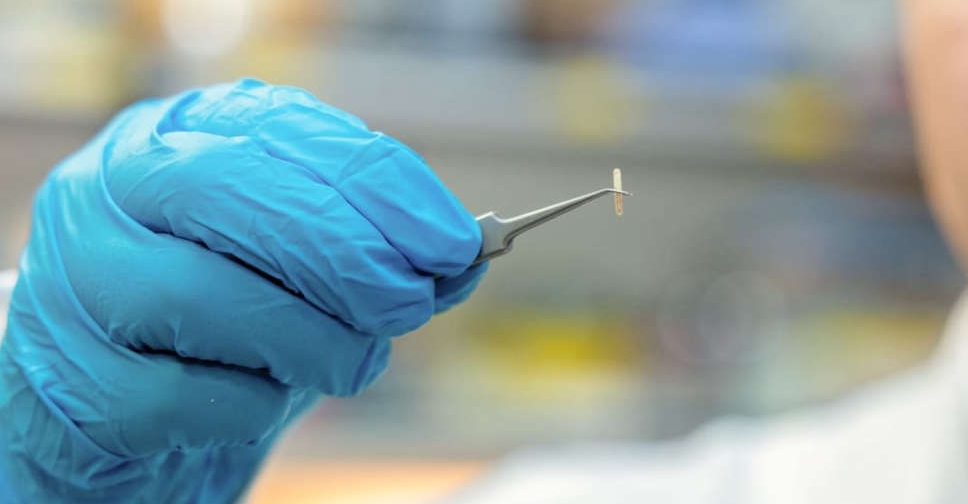
Researchers at NYU Abu Dhabi and Cleveland Clinic Abu Dhabi have developed a tiny injectable device that could offer a new way to treat chronic pain and neurological disorders without the need for surgery.
The device, about the size of a small seed, can be injected into the body using a standard needle and placed near a target nerve. Once in position, it delivers controlled electrical signals that influence how the nerve behaves. It is powered wirelessly from outside the body, allowing doctors or patients to adjust its activity in real time.
The research, published in Science Advances, offers an alternative approach that combines precision with minimal invasiveness. The new technology complements existing treatment options, which may include medical implants or medications depending on the patient’s condition and needs.
“This work represents a shift in how we think about treating nerve-related conditions,” said Prof. Khalil Ramadi, Assistant Professor of Bioengineering at NYU Abu Dhabi and NYU Tandon and the study’s senior author. “By creating a device that can be injected rather than surgically implanted, we are making these therapies simpler, safer, and more accessible, while still maintaining precise control over nerve activity.”
The device can be tracked using standard medical imaging, such as ultrasound and CT scans, allowing for accurate placement and monitoring. Once deployed, it delivers programmable electrical stimulation, enabling tailored treatments based on patient needs.
“This collaboration with NYU Abu Dhabi reflects our commitment to advancing innovative, clinically relevant research that translates into meaningful improvements in patient care,” said Dr. Sawsan Abdel-Razig, Chief Academic Officer at Cleveland Clinic Abu Dhabi. “By bringing together multidisciplinary expertise, this work highlights how academic partnerships can accelerate the development of safer, less invasive therapies and expand access to advanced treatments for patients.”
In laboratory and preclinical testing, the device demonstrated precise control over nerve stimulation and consistent performance under realistic conditions. It also successfully activated nerves in vivo, confirming its potential for real-world applications.
“This technology has the potential to bridge the gap between non-invasive therapies and traditional implants,” said Dr. Mohamed Elsherif, Research Associate at NYU Abu Dhabi and first author of the study. “It opens the door to treatments that are both effective and easy to deliver, which could significantly improve patient care.”
By reducing the need for major procedures and simplifying how advanced therapies are delivered, the device could make treatment more accessible while lowering risks and recovery times.

 UAE launches annual award to honour changemakers
 UAE welcomes Gaza agreement for Hamas disarmament
 Sheikh Abdullah meets UK Foreign Secretary in London
 H.H. Sheikh Hamdan attends GCC joint military drill in Bahrain